Selling wholesale online: a store that also quotes
Ecommerce · 2026-09-22 · 6 min · Hi Marky
Not every customer buys by card. How one store can serve the person who wants one pair and the one who needs five hundred.
In short
- A company's purchase starts like any other: someone searches on Google, compares on their phone and wants a quick answer.
- The same store can serve the person who buys a pair of boots and the one quoting for an entire construction site.
- Showing the unit price and offering volume quotes filters better than hiding everything.
The purchasing manager of a construction company needs to equip forty people before Monday. He's not going to tour warehouses. He's on a site, phone in hand, with ten free minutes. He searches Google for the product name and the city, opens the first three results and checks which one tells him what he needs to know: whether it meets the standard, which sizes are available and how much it costs.
The supplier that doesn't show up, or shows up with a site that only says "contact us for more information," just lost the order without knowing it. Many businesses that sell to companies believe online commerce isn't for them, because their customers ask for quotes, negotiate and pay at thirty days. The way any purchase begins today says otherwise.
The business buyer is also a person
Whoever buys workwear for a site, supplies for a factory or equipment for an office is an employee short on time. They research the same way as when they buy for their home: search, compare, read.
The difference is in what they need to decide. Clear spec sheets, with the standard the product meets, its materials, sizes and certifications. Real photos from several angles. Prices, or at least a reference. Certainty that there's volume pricing. Availability and delivery times. A short quote form, someone to answer technical questions and an invoice in the company's name without extra paperwork.
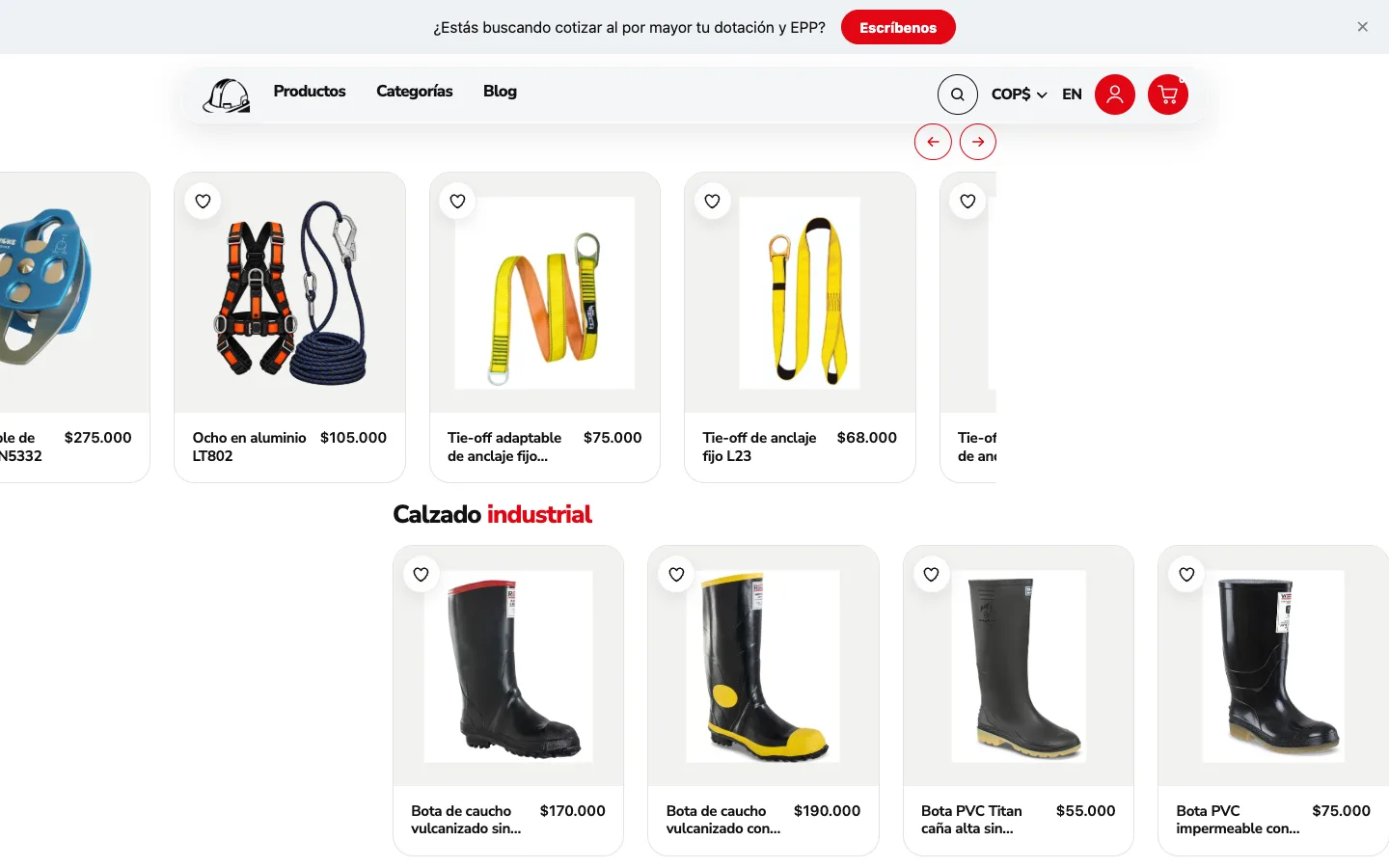
In the store of Dotepp, which sells workwear and personal protective equipment, both kinds of buyer coexist. Whoever needs a pair of boots or a helmet buys directly, with their payment method, as in any store. Whoever is equipping a whole site requests a quote from the same page, with their quantities. There was no need to build two sites. It's the same catalog with two exits.
To show prices or not
It's the eternal debate. The argument for hiding them is that the customer calls and the salesperson can negotiate. That made sense when there was no alternative. Today whoever can't find the information keeps searching, and finds it on the site next door.
Showing the unit price and offering volume quotes filters better. Whoever writes already knows the range and arrives with real intent, which saves the sales team time. If prices depend heavily on the customer, there are middle grounds: publish a "from" price or give registered customers access to special prices.
Whoever can't find the price doesn't call. They keep searching.
The form, the response and the advice
The quote form is the central piece and should be short. Products and quantities, ideally taken from the cart. Name, company, phone and email. Delivery city and a free field for notes. Nothing more, because every additional field reduces requests and the rest can be asked when replying.
An especially useful feature is turning the cart into a quote. The person adds what they need, with their quantities, and instead of paying requests a price.
Then comes what decides the business: answering fast. The quote that arrives first has the advantage, and a request that comes in on Friday and gets answered on Tuesday has probably been resolved elsewhere. An automatic confirmation of receipt helps, along with a promised and kept response time, templates to put together the proposal in minutes and a clear person in charge.
With technical products, doubt holds back the purchase. Whether a harness works for working at heights, what type of respirator is needed. A WhatsApp button with an advisor who knows the subject resolves in minutes what a form can't, and the product page should answer the most common questions up front.
Organize the catalog the way the customer thinks
A company doesn't search by the supplier's internal reference. It searches by need. By type of work, like heights, welding or construction. By the part of the body being protected. By industry. By standard or certification. A search engine that understands synonyms and a good filter system are worth more in a business store than in a consumer one.
Some features help as volume grows: minimum order per product or per order, tiered pricing by quantity, company accounts with several users, order history to repeat a purchase, saved lists and spec sheet downloads. Not all are needed from day one.
Payment is different too. Bank transfer, corporate card, credit terms for approved customers and electronic invoicing with the company's details. The store should allow an order to be placed without paying at the moment, when agreed, and capture tax information correctly.
What the seller gains, and where to start
What changes for the seller is concrete. Requests arrive organized, with exact products and quantities. There are fewer calls asking about what's already published. The catalog works at night, on weekends and holidays. Customers appear who came from Google without a single sales visit. And there's data on what's searched, what's quoted and what doesn't close.
The sales team doesn't disappear. Its work changes. Instead of explaining the catalog from scratch, it receives customers who already know what they want, and its time goes to negotiating, advising and building relationships.
For the site to show up, remember how companies search, with very specific terms: the product's technical name, the standard, the city. Each category and each product with good content is a way in, as long as titles use the name the customer uses and descriptions have the technical data in text.
The common mistakes are hiding all prices, building endless forms, publishing product pages without technical information, answering late, requiring sign-up to see the catalog and neglecting the mobile version on the grounds that companies buy from a computer. That stopped being true.
Getting started doesn't require a big project. Publish the full catalog with clear product pages, enable direct purchase for small orders, add quote requests for volume, keep an advice channel visible and measure how many requests arrive and how many turn into sales. Selling to companies online isn't about removing people from the process. It's about making sure that, when the customer finally talks to one, everything a page could answer has already been answered.