Local SEO: how a hair salon went from almost zero to 5,330 Google impressions
SEO & GEO · 2026-11-08 · 5 min · Hi Marky
The case of VIP Studio in Bogotá, with Search Console data: what was done, in what order and what started bringing clicks.
In short
- In three months VIP Studio reached 5,330 Google impressions (+3,130%) and 84 organic clicks (+500%), according to its Search Console.
- What mattered most wasn't technical: one page per service, the city written in the text and published prices.
- The average position is 9.1: Google already takes it into account, but it still has to climb to where the clicks are.
VIP Studio is a premium hair salon in Bogotá. It had an active Instagram, loyal clients and a website practically nobody found. Three months after reorganizing it, its Search Console tells another story: 5,330 impressions, 3,130% more than the previous period, and 84 organic clicks, 500% more.
These aren't a multinational's numbers. They belong to a neighborhood business that started showing up when people search for it, and that's why they make a good example: what was done is within reach of almost any local business, with no big budgets or exotic tools. This is the account of what changed, in what order, and what is still missing.
5,330 — Google impressions in three months, against a previous period close to zero. VIP Studio's Search Console data.
The starting point
The old site packed every service onto one long page. The salon's location appeared only in the footer, prices were given by message and the photos were so heavy the site was slow to load on a phone. To Google it was a page that talked about a bit of everything and nothing in particular.
The underlying problem is more common than it seems. The business communicated very well on social media, where people already knew it, and almost not at all on search, which is exactly where people who don't know it yet come from. It had its relationship with current clients sorted and the front door for new ones abandoned.
One page per service
This was the first change and the one that mattered most. Google doesn't rank sites; it ranks pages for specific searches. A single page can't answer, at the same time, someone looking for balayage, someone asking the price of microblading and someone who wants a lash lift near home.
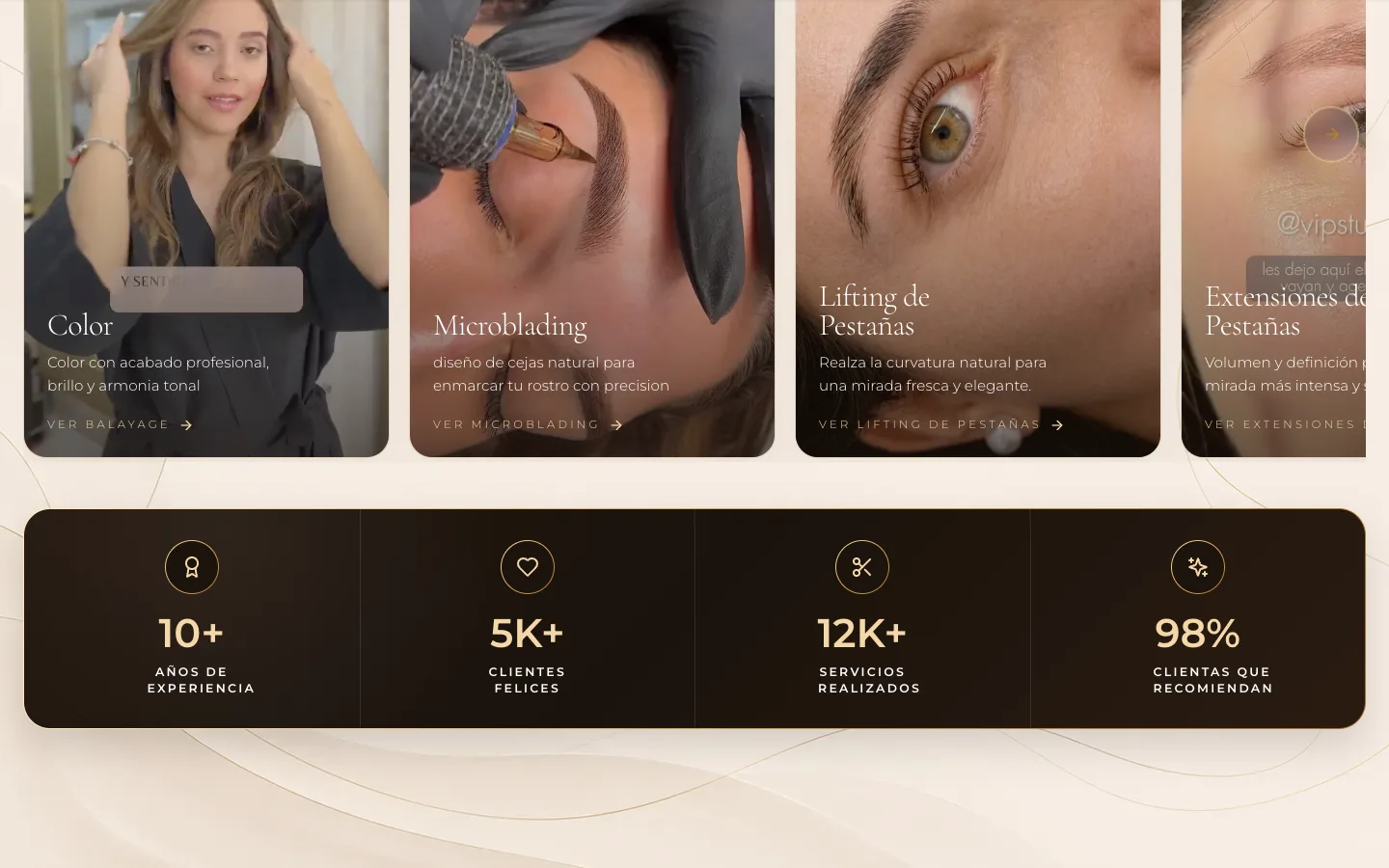
So every important service got its own page: balayage, microblading, lash lift, hair color. All with the same structure: what the service is, who it's for, how long it takes, how much it costs, the most common questions and a booking button. That repetition isn't lazy design. It teaches the search engine, and the client too, where to find each fact without reading everything.
Each page says naturally where the salon is and who it serves. Nobody searches just "lash lift"; they search the service plus the city, or add "near me." You can see the effect in the queries that bring clicks today, like "lifting de pestañas bogota," which used to bring no one.
Publishing the prices
This was the decision that raised the most doubts. People fear competitors will copy them or that clients will be scared off before writing. In practice the opposite happened: the services and prices page is the second most-clicked page on the whole site, and whoever writes after seeing it arrives pre-qualified, knowing the price range.
There's also a technical reason. A price written on the page is a fact Google can show next to the result and that an AI assistant can cite when someone asks how much a service costs in the city. A price that's only given out over WhatsApp doesn't exist for either.
A small blog was added, built from the salon's real questions. One of them, which balayage shade suits each skin tone best, became an article that's already among the pages with clicks. It isn't filler: it's the conversation that happens every day in front of the mirror, written down.
Google doesn't rank sites, it ranks pages. One page that talks about everything wins no search.
How to read these numbers without fooling yourself
5,330 impressions means Google showed the site that many times. The 84 clicks are the times someone came in. The CTR, the ratio between the two, is 1.6%, and it's low. There's a reason: with an average position of 9.1, the site usually appears at the bottom of the first page, where very few people get to.
The honest reading isn't "we're ranked now." It's "Google is taking us into account." It's the first stretch of a longer road. The next one is moving from ninth place toward the top three, where almost all the attention concentrates, and improving titles so more of the people who see it decide to click.
The technical work came along without stealing the show: unique titles and descriptions on every page, a submitted sitemap, pages indexed one by one, local business structured data and light images. None of it would have helped on the old structure.
What's missing, and what anyone can copy
Local SEO doesn't end on the website. When someone searches for a nearby service, the first thing they see is a map with three listings, and getting in there depends on the Google Business Profile: correct categories, services loaded with prices, recent photos and steady reviews. That's VIP Studio's next front, along with measuring how many WhatsApp clicks come from organic search. Without that measurement you know more people arrive, but not how many end up booking.
For another local business, the recipe comes down to a few decisions: one page for every service you want to sell, the city and area written in the text, prices and duration visible, real FAQs and Search Console installed from day one so you have something to compare against.
The lesson of the case is the order. First structure and clear content, then the technical side, then the listing and reviews. Skipping the first step and paying for ads to send people to a confusing page is the most expensive way to learn it.