An MVP in eight weeks: how to validate a platform without spending a year
Web development · 2026-10-10 · 5 min · Hi Marky
What goes in, what stays out and how it's decided. The case of Vethogar, a veterinary marketplace.
In short
- An MVP isn't a poor version of the product: it's the shortest way to answer a question with real users.
- At Vethogar four features went in and five stayed out; a single question decided it.
- Eight weeks split into two of design, four of building and two of testing and launch.
The story is familiar to anyone who has tried to launch a platform. A year of development, a product with every feature imaginable, a launch with an event and then silence. Nobody uses it. Not because it's badly made, but because nobody checked beforehand whether people wanted it.
Most platform ideas don't die from lack of talent or money. They die from building too much before knowing. An MVP, minimum viable product, exists to avoid exactly that, and the Vethogar case shows how to plan one in eight weeks.
What it is and what it isn't
It's minimum because it includes only what's needed to test the idea. It's viable because it really works: someone can use it and get the promised result. Both words matter equally, and almost every misunderstanding comes from forgetting one.
It's not a prototype that only looks good in a presentation. It's not the first stage of a plan that's already decided. And it's not an excuse to deliver something badly made: the little it has must work well, because if it looks unreliable people won't use it and the test says nothing.
An MVP isn't a cheap version of the product. It's an instrument to measure whether the product is worth making.
Vethogar's question
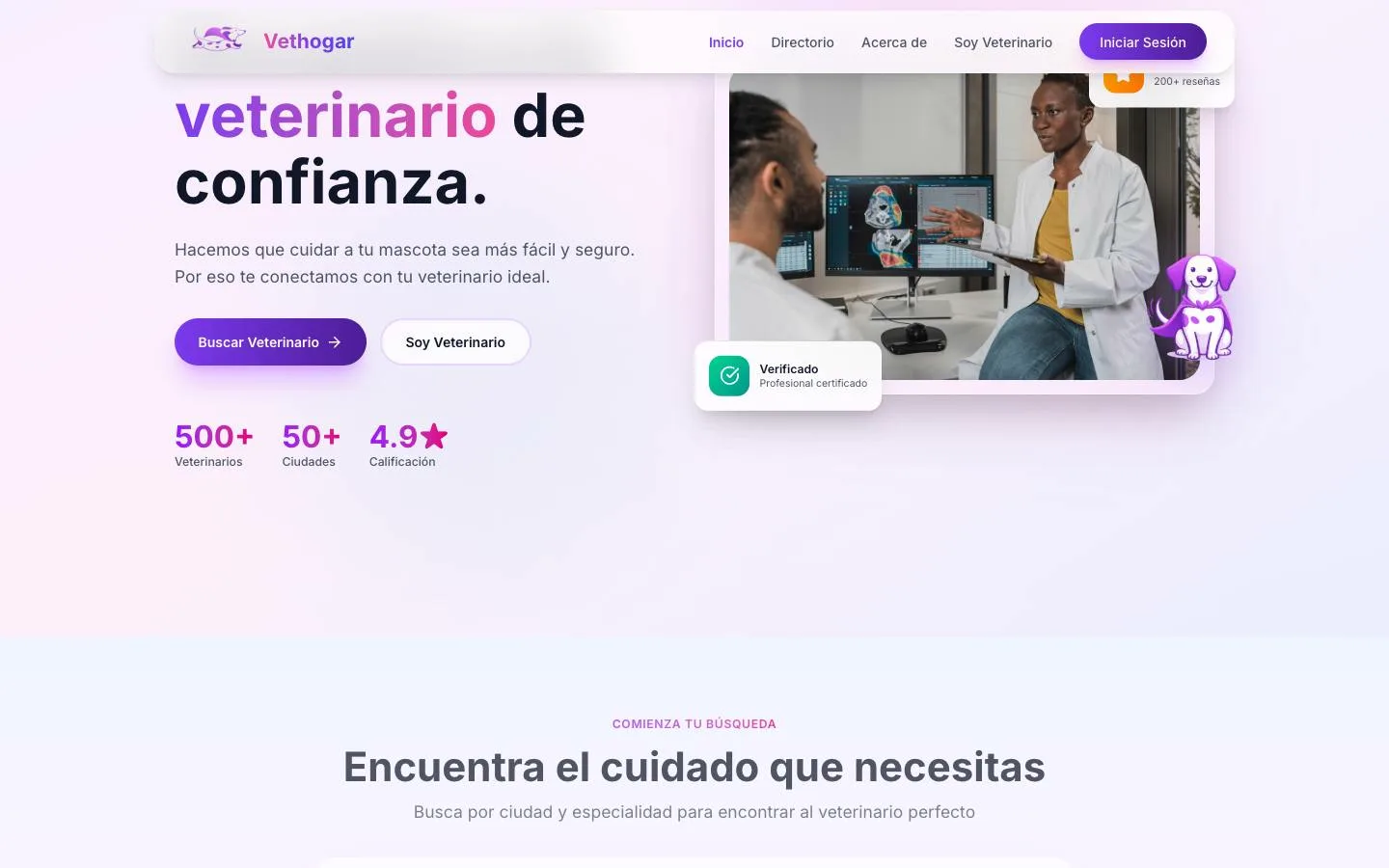
Vethogar wanted to connect pet owners with verified veterinarians. The temptation was to think of a complete marketplace, with scheduling, payments, medical records and a mobile app. All of that sounded reasonable and would have taken more than a year.
The question that had to be answered was much simpler: would a pet owner search for and contact a vet through it? If the answer was no, nothing else mattered. If it was yes, the rest could be built later with data in hand. Everything that didn't help answer it stayed out.
Four things went in: search by city and specialty, verified vet profiles, reviews from other owners and direct contact via WhatsApp. With that, a person could find a professional, trust them and write to them. The full cycle, no frills.
Online payments, built-in scheduling, the native app, the stats dashboard for vets and medical records stayed out. Each one could be valuable. None was necessary to know whether the idea worked, and each would have added weeks.
How to decide what goes in
There are two simple tests for any feature someone wants to add. The first: if I remove it, can the user still do the main thing? If the answer is yes, the feature waits. The second: can it be handled manually at first? In many minimum products part of the work is done by a person behind the scenes, and that's fine. Automating something you don't yet know anyone will use is spending in advance.
A marketplace also has the chicken-and-egg problem. Owners don't come if there are no vets, and vets don't sign up if there are no owners. In practice you start with the harder side to get and with a single city. A good supply in one place beats a thin one across the whole country.
The eight weeks
The first two are for definition and design. The question is agreed on, the user journey is drawn and a clickable prototype is built. That prototype saves more than it costs, because changing a screen at that stage takes minutes and changing it once it's coded takes days.
Weeks three to six are for building, starting with the main journey end to end and leaving details for later. The last two are for testing with real people, fixing and launching. You don't need a big company's architecture, just something that can be built fast, maintained and changed. Familiar tools are worth more than the latest novelty.
Before launch, you decide which numbers will answer the question: how many people search, how many open a profile, how many tap the contact button, how many professionals complete their profile and how many users come back. If many people search and almost nobody makes contact, the problem is in the profiles or in trust. If nobody searches, the problem comes earlier.
After launch
That's where the real work begins. What the first users say decides what gets built next, and it almost never matches the original list. The feature everyone asked for may go unused, while something small, added at the last minute, turns out to be the most valued. That's why it pays to talk to users and not just look at numbers: numbers say what's happening, conversations say why.
The typical mistakes are about discipline. Adding "just one more thing" every week until it's no longer minimum. Building for an imaginary user without having talked to a real one. Launching without measurement and settling for impressions. Or treating the result as a finished product and never touching it again.
It isn't for every case either. If you already have customers paying for a manual process and know exactly what they need, you may not need to validate but to build. The MVP is for when the main doubt is whether anyone will want it. Eight weeks aren't enough to do everything. They're enough to know whether it's worth doing.