If they don't stay past second three, nothing that comes after matters. Types of hooks and how to know which one works for your brand.
- The decision to stay or swipe is made in the first three seconds; that stretch has its own metric.
- Five types of hook work consistently: direct question, result first, concrete number, negation and relatable situation.
- You don't choose by intuition: shoot five videos with each type and compare retention at seven days.
Try it on your own phone. Open any short-video app and notice how long it takes you to decide whether to stay with what appears. It's not a minute or ten seconds. It's an instant, almost a reflex, and most of the time the thumb has already moved before the person on screen finishes their first sentence.
The same happens to your video in front of every viewer. If they don't stay past second three, no matter how good what comes next is, they won't see it. That's why the hook is the variable that most moves a short video's result and the first one worth testing.
What a hook is, and why three seconds
The hook is what happens in the first seconds: the first image, the first sentence, the first on-screen text. Its only job is to give a reason to keep watching. It's not the title or the caption. It's what the person sees and hears before deciding whether to swipe.
Three seconds isn't an arbitrary number. Platforms measure how many people keep watching after the start and use that data to decide how many more people to show the video to. An opening that loses most viewers dooms everything after it. That's why the hook should be measured with its own metric: the percentage of people still watching at three seconds.
There are also three layers happening at once. The visual, which is what appears in the first frame: movement, a face, the product in action. The on-screen text, which should appear from the very first instant because many people watch without sound. And the audio, with the first sentence or first sound. All three have to say the same thing. Text that promises one thing and a voice that starts with another confuse, and confusion makes people swipe.
Five types that work
The first is the direct question. "Looking for new bikes?" speaks to whoever already has the need and filters out whoever doesn't, which is exactly what you want. That's how one of the reels we edited for Jeem opens.
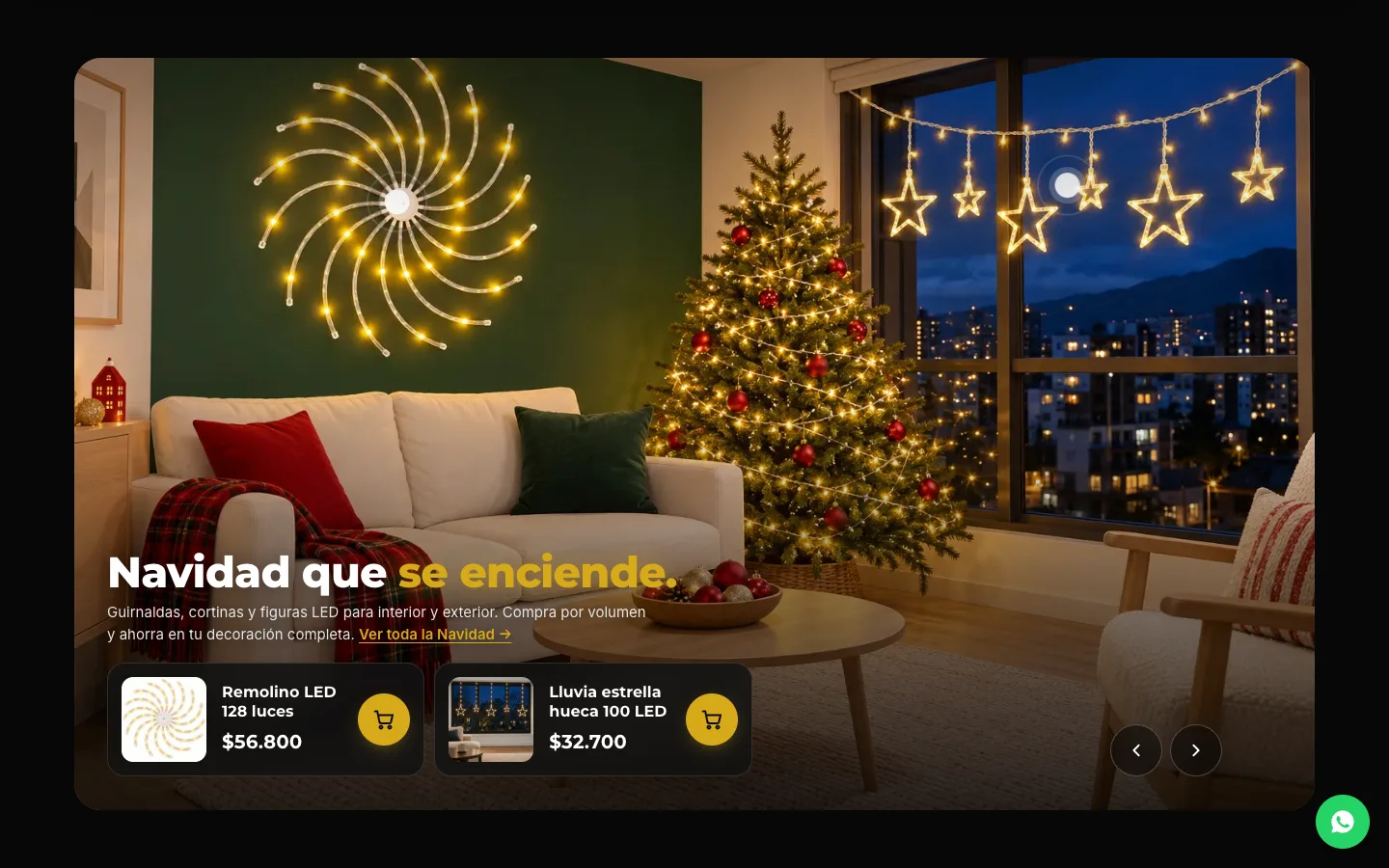
The second is result first: show the after and then tell how you got there. It works very well in beauty, home, food and any visible transformation. The third is the concrete number, like "Decorate your Christmas with 80,000," the opener of Innovalite's series. A number promises precise information.
The fourth is negation or mistake, like "stop doing this to your hair." It sparks curiosity and a bit of alarm. It works, but it gets tiring if the whole account sounds like a scolding. And the fifth is the relatable situation: a moment your customer has lived, acted out without introduction. The printer that doesn't work, the package that doesn't arrive. People see themselves in it and stay to find out how it ends.
If your hook speaks to everyone, it's speaking to no one.
What kills a hook
The causes of death are almost always the same. The logo or brand animation at the start, because nobody stays to watch an intro. The greeting, like "hi everyone, welcome to a new video." Text that takes a second to appear. A still, empty shot. Starting by explaining who you are. Low volume or silence at the beginning. And the long sentence that goes around three times before getting to the point.
An order helps when writing it. First the hook and then the rest of the script, not the other way around. Five versions before choosing one. Read it aloud and trim it if it takes more than two seconds. Ask whom it speaks to. And make sure the video delivers what the opening promises.
AgencySee what our team does→How to test which one works for you
You don't choose by intuition. You test. Take two types of hook and shoot five videos with each, on the same topic and with the same structure. Post them alternately. At seven days, compare the percentage still watching at three seconds.
Whatever wins is valid for your audience, not another brand's. That's why copying the trendy hook helps little: it worked in another context, with other people.
There's a production trick that makes everything cheaper. During the shoot, record three or four different openings for the same video. It takes minutes and lets you test without reshooting the rest, because in the edit you put together one version with each.
Depending on the business, there are reasonable starting points. A clothing store can open with the finished outfit or with the most common styling mistake. A beauty salon, with the final result before the process. A restaurant, with the dish at its best in close-up. A professional service, with the question its customers ask most. And a technical product, with the problem it solves, shown rather than explained.
The promise, and what comes after
An exaggerated hook wins the three seconds and loses the rest. People leave annoyed, and that early exit counts too. Worse, they stop trusting the account. The rule is simple: the hook promises something the video delivers. It can be intriguing, but not dishonest.
Winning the opening is half the job. Next is holding attention, and that depends on structure, on each part offering a reason to watch the next. That's the second experiment. As long as the opening keeps losing most viewers, it's not worth refining the rest.
There's a quick review you can do today. Open your last ten videos and watch only the first three seconds of each, without sound. Ask whether it's clear what it's about, whether there's movement and whether the text appears immediately. The ones that fail that test almost certainly match the ones with the worst results.
Hi Marky · November 7, 2026