
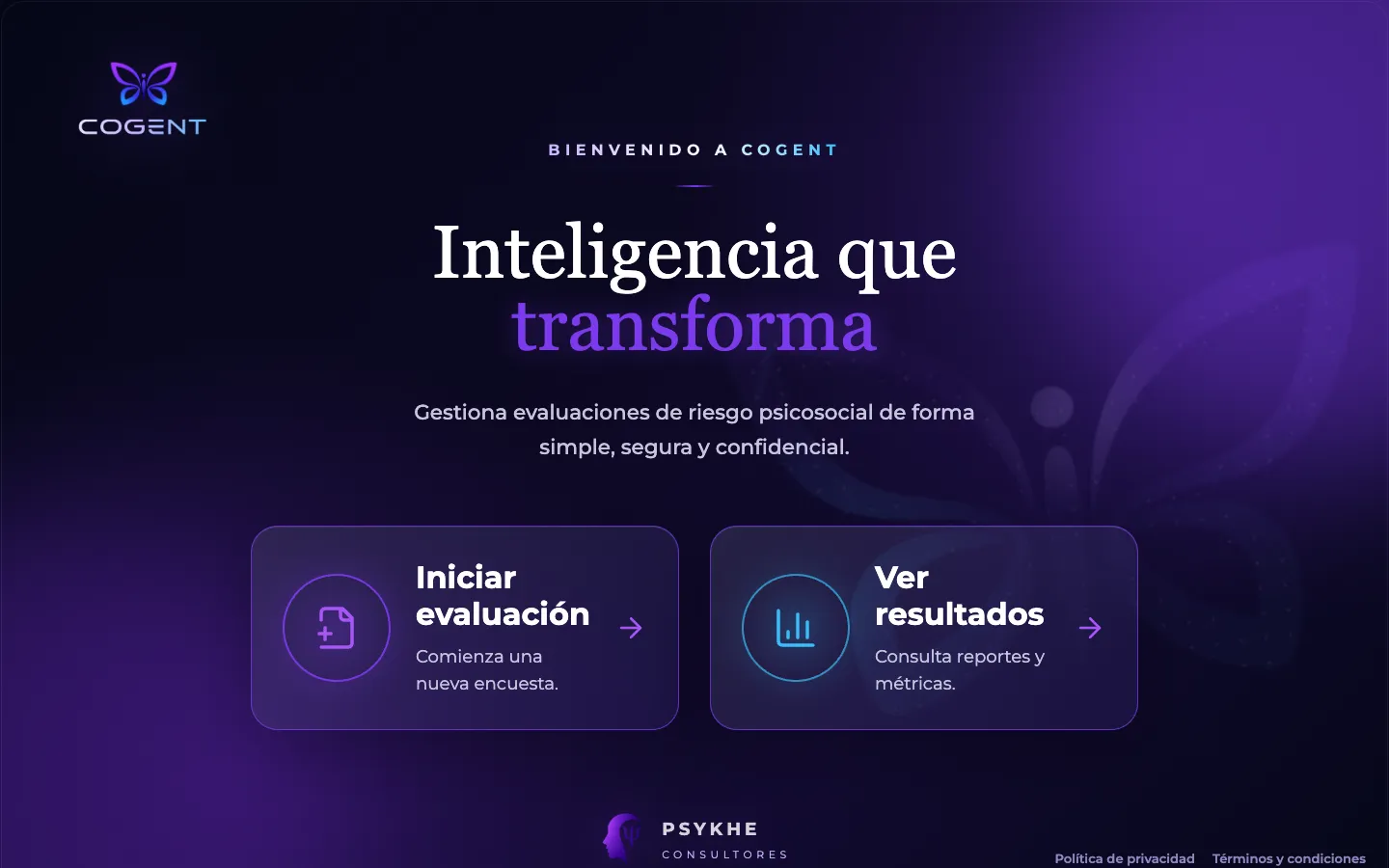
The case of Cogent, the platform we built for Psykhe, and the questions to know whether your process deserves its own software.
- At Psykhe Consultores a psychosocial risk report took about three days; with Cogent it comes out in hours.
- Your own software is worth it when the process repeats, has clear rules and limits how many clients you can serve.
- AI writes from results that have already been calculated; exact rules are programmed and a professional reviews.
There are tasks a company does so many times it stops seeing them. Someone collects information, moves it into a spreadsheet, applies some formulas, writes a document and sends it. Always the same, always by hand and always with the same waiting time. Nobody questions it because that's how it's always been done.
Psykhe Consultores had one of those tasks. Each psychosocial risk report took about three days. Today it takes hours. What follows is the account of that change and of the questions that help you know whether a process in your company deserves its own software.
3 days → hourstime to produce a psychosocial risk report at Psykhe, before and after Cogent.
The original process and what was built
Psykhe applies the psychosocial risk battery in companies, an assessment that Colombian organizations must carry out with their workers. The work had several stages: administering the questionnaires, collecting and entering the answers, calculating the results according to the official methodology, interpreting the risk levels and writing the report for the company.
Each stage depended on qualified people doing repetitive work. The limit on how many clients could be served wasn't set by demand. It was set by the calendar.
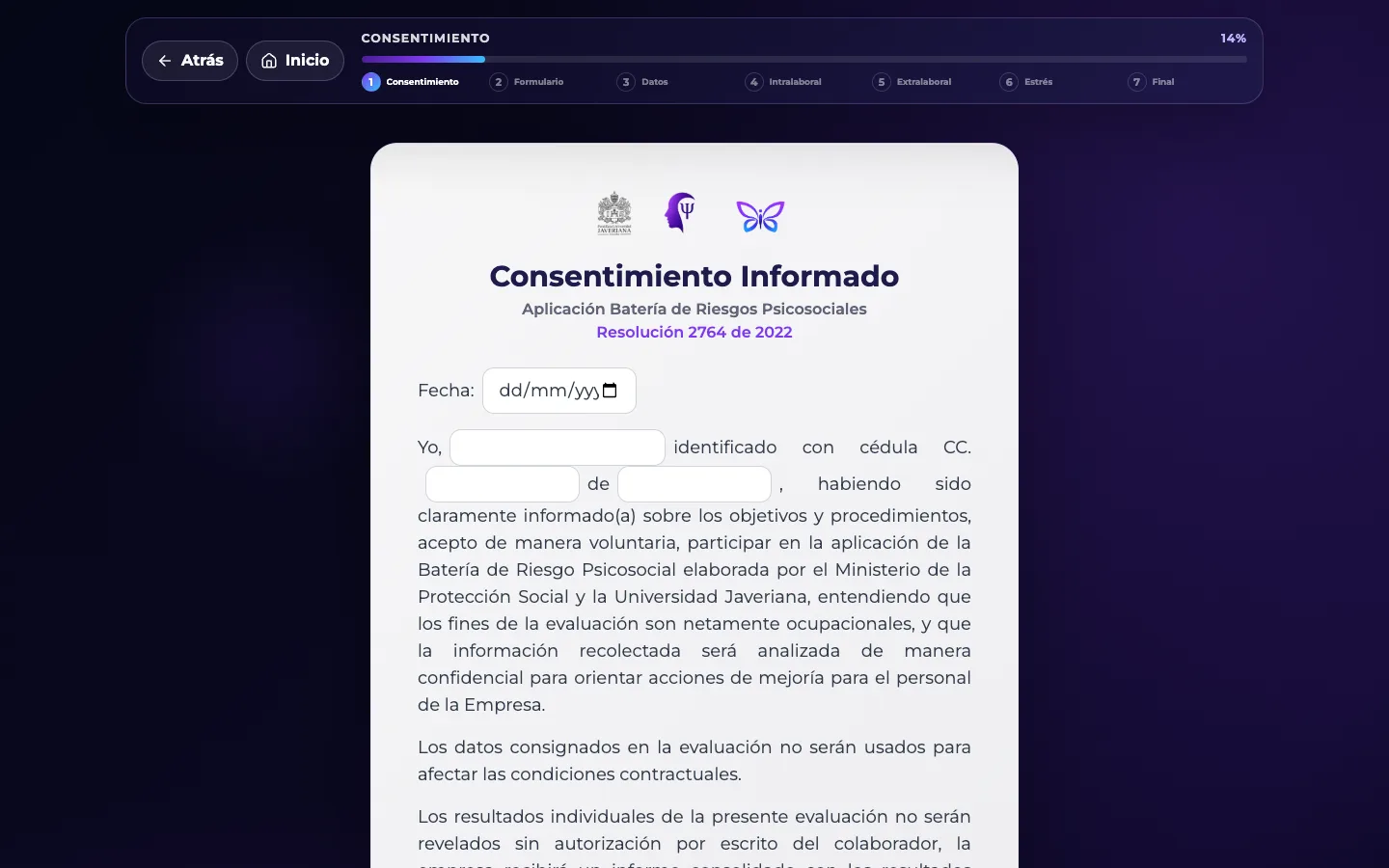
Cogent is a platform made for that process. Each worker answers the assessment from their phone or computer, after accepting an informed consent. Answers are stored confidentially. Results are calculated automatically. And reports are generated with the help of artificial intelligence, from the data. The professionals now spend their time analyzing and intervening, which is what only they know how to do.
Why not an existing tool, and when it's worth it
There are survey platforms and HR systems of every kind. None followed the specific methodology, with its forms, its calculation rules and the report structure the sector requires. Forcing a generic tool would have meant continuing to do the heaviest part by hand. Sometimes what already exists solves ninety percent. Not here.
Custom software is worth it when the process repeats many times with the same steps, when there are clear rules someone applies by hand today, when it's a bottleneck limiting growth, when manual errors have consequences and when no existing tool fits without forcing it.
It isn't worth it when the process still changes every month, when a well-made spreadsheet solves almost everything, when nobody will use it every day or when the volume is so low that the cost is never recovered.
Building software for a process that isn't understood yet is automating the mess.
What AI does and doesn't do
In Cogent, artificial intelligence helps write the reports from results that have already been calculated. It doesn't decide the risk levels. Those come from rules defined by the methodology.
The separation matters and serves as a guide for any similar project. Where there's an exact rule, program the rule. Where data has to be turned into clear text, artificial intelligence contributes. And there's always a professional who reviews before delivery. Putting a model in charge of deciding what a formula should decide is asking for trouble.
AgencySee what our team does→Sensitive data and people who have to use it
When you handle people's answers about their work and well-being, confidentiality isn't an extra feature. It defines the design from day one. Informed consent before answering. Restricted access, so each person sees only what concerns them. Protected individual results. Clarity about what's stored and for how long. And compliance with data protection rules. A system that makes the work easier but exposes that information would be a bigger problem than the one it solves.
There's another, less obvious risk. Software can be correct and fail because nobody wants to use it. Workers who answer the assessment don't get training: they have to be able to do it without help, from their phone and step by step. That's why the experience of whoever answers was designed with the same care as that of whoever analyzes. A confusing form produces incomplete answers, and incomplete answers ruin the result.
How it's planned, how it's measured and what it costs
A project like this starts by understanding the process as it actually happens, not as it should. Identify which steps are rules and which are judgment. Define the minimum that solves the bottleneck. Build that first version and test it with real cases. Adjust with what you learn and only then expand. Starting with everything desirable is the surest way never to finish.
To know whether it was worth it, measure time per case before and after, how many cases the team can handle, errors detected, the time professionals recover for higher-value work and client satisfaction with delivery. Going from three days to a few hours is an easy result to explain. It isn't always that clear-cut, which is why it's worth measuring the starting point before you begin.
To the cost of development you have to add maintenance, hosting, support and improvements. Your own software is an asset you look after, not a one-time purchase. On the other side of the scale is the cost of not doing it: hours of qualified staff on repetitive tasks, clients who can't be served and errors.
Sometimes, too, what was built for internal use ends up being something that can be offered to others, because a process solved well for one company is often the same problem many in the industry have. It's not the initial goal, but it changes the math of the investment.
The best custom software isn't the most ambitious or the one using the trendy technology. It's the one that takes the heaviest task off a team, so it can focus on what its clients actually pay it for.
Hi Marky · September 26, 2026