Nvidia is the trending tech search in Colombia this week. Behind the noise are three uses of AI that already work for a small business.
- "Nvidia" tops Colombia's tech trends this week: it makes the chips that run much of today's AI.
- A small business doesn't get the chip, it gets the result: more capable, cheaper tools for customer service, content and operations.
- The useful question isn't which AI to use, but which repetitive task takes up the most of your time each week.
This week, the fastest-growing tech search in Colombia isn't a new phone or a social network. It's the name of a company that makes chips. "Nvidia" tops Google Trends in the country, along with searches about Jensen Huang, its CEO.
It's not surprising. Every time the company makes the news, half the world wants to understand how a component maker became the barometer of an entire industry. For a small business, though, what matters isn't the stock price or the processor model. It's what it can do today with what that infrastructure already makes possible, and which part of the conversation is pure noise.
Why everyone is talking about Nvidia
Nvidia started out making graphics cards for video games. It turned out that the same kind of processor that draws graphics on a screen is very good at the calculations artificial intelligence needs. Today many of the models people use — the ones that write, summarize, generate images or answer by chat — are trained and run on its chips.
That's why its name comes up in every conversation on the subject. It's the company selling shovels in a gold rush: whoever wins the model race, almost everyone buys from it.
That reaches your business indirectly. Nobody at a small company is going to buy one of those chips. What arrives is the result: AI tools that are ever more capable and cheaper, available from a browser or connected to WhatsApp and the store. What five years ago required a team of engineers is now within reach of a ten-person company.
Three uses that already work
The first is customer service. An agent trained on your catalog and policies answers on WhatsApp and the web at any hour, recommends products based on what the person says and hands the conversation to someone on the team when human judgment is needed.
The second is content. From a real photo, consistent product images can be produced for a whole catalog. Also video scripts, subtitles, translations and versions of the same text adapted to different channels.
The third is internal operations, usually the least visible and most profitable. Summarizing long conversations, sorting orders or requests, extracting data from documents and generating reports that used to take days. It's the kind of work nobody misses when it disappears.
AI scales what's already clear. If your offer isn't understood, it will just repeat it faster.
What it doesn't do, and the mistake of starting with the tool
There are three limits worth keeping in mind. It doesn't understand your business unless you explain it: without your data, it answers with generalities that serve everyone and no one. It doesn't replace judgment, so someone has to review what comes out, especially if it's customer-facing. And it doesn't fix a confusing offer.
That leads to the most common mistake, which is starting with the tool. Many businesses ask which artificial intelligence they should use, and that's the question backwards. The useful one is which task takes up the most of their time each week.
The exercise is simple. List the repetitive work: answering the same ten questions, moving data from one place to another, writing product descriptions, putting together Monday's report. Pick one. That's where the project starts, not in comparing plans and features.
AgencySee what our team does→A case: from three days to a few hours
Psykhe Consultores runs psychosocial risk assessments for companies. Each report meant collecting answers, calculating results and writing a document. It took about three days.
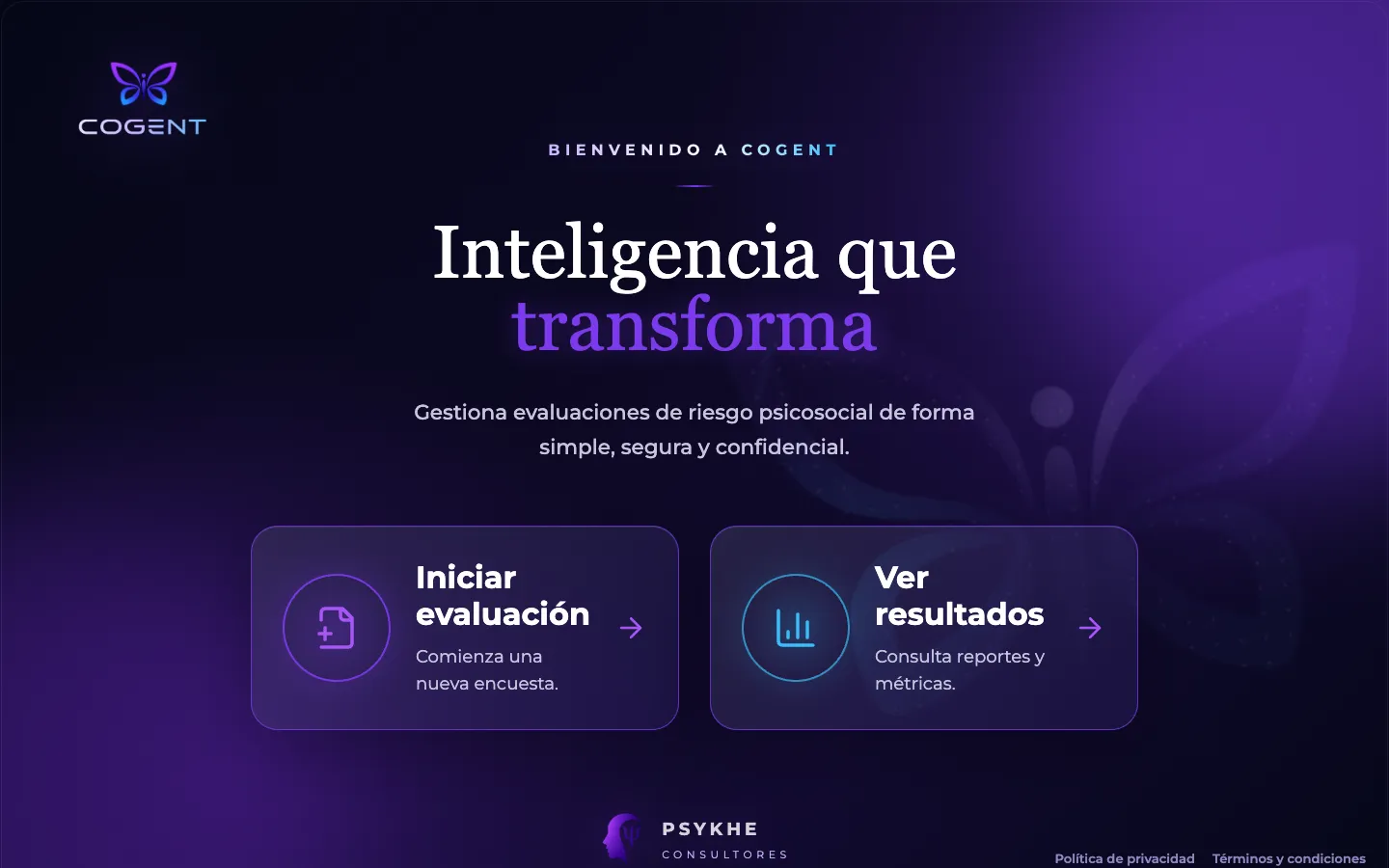
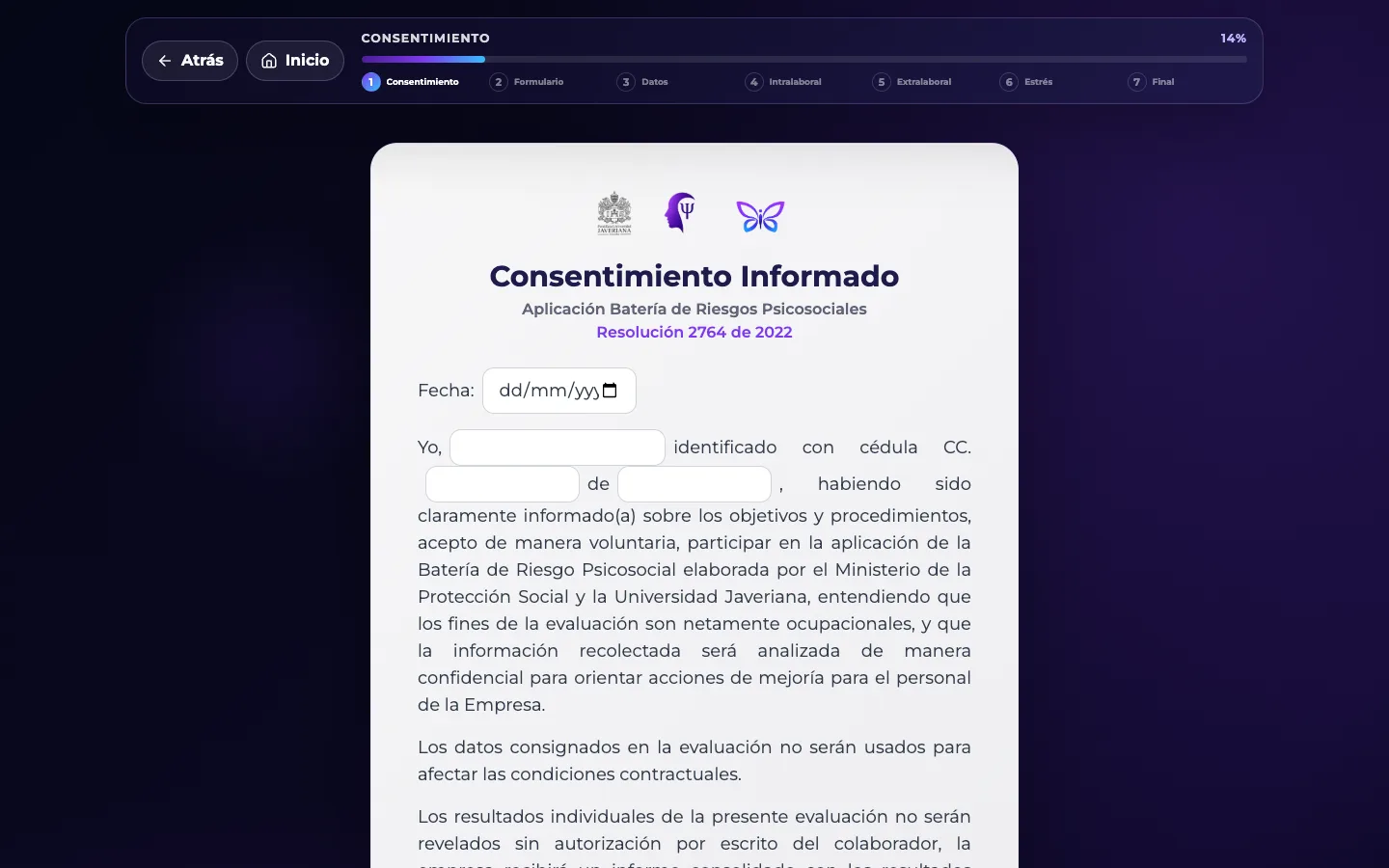
We built Cogent, a platform where each worker answers from their phone, the calculation is automatic and reports are generated with the help of artificial intelligence. Today they come out in hours. It's worth noting where it started: not with the idea of "using AI," but with a concrete bottleneck that limited how many clients could be served.
3 days → hourshow long a psychosocial risk report took at Psykhe before and after Cogent.
What it costs, and what to watch
Getting started costs less than people think if you start small. General-purpose tools have affordable monthly plans. What really costs is the time of a person who tests them seriously, organizes the business's information and reviews the results. A custom project, like an agent connected to the store or a platform of your own, is another scale and is justified when the problem is big and repeats daily.
Be careful with data from the start. Don't upload customers' personal information without reviewing the service's terms. Use business accounts, not personal ones, for company matters. Define what can and can't be shared. And if you handle sensitive information, health or financial, get advice first.
A risk-free way to test is to pick an internal task the customer doesn't see and try it for two weeks with one person in charge. Compare how long it took before, how long it takes now and how good the result is. If it works, document it and extend it. If not, drop it without guilt, because not every task improves with artificial intelligence.
What's coming and what doesn't change
Models will keep getting better and cheaper. That's what the data centers putting Nvidia in the headlines are being built for. For a small business it means that what seems clumsy today may work well in a few months, so it's worth checking in periodically without obsessing over every announcement.
It also means your customers increasingly use assistants to search and decide. Making your business easy for a machine to understand — prices in text, clear data and consistent information — is starting to matter as much as showing up on Google.
What doesn't change is the fundamentals. People still buy from whoever understands their problem, answers on time and delivers what they promise. Artificial intelligence can help with all three and can't replace any of them. The wave is real, but for a small business it isn't about jumping on because everyone's talking about it. It's about getting rid of one concrete problem and spending that time on what only people know how to do.
Hi Marky · November 12, 2026